Community-Driven Development versus Community Outreach

May 17, 2013

Tuesday night we had our Colombia Project Director Dr. Santiago Giraldo speaking here in Palo Alto on “Education and Community at Ciudad Perdida”. The Global Heritage Fund (Join Here!) works to preserve the most significant and endangered heritage sites in the developing world, and Ciudad Perdida is a prime example, abandoned in the 16th century after a thousand years of unique urban development, the site was left to the ravages of the jungle, looters and narcotraffickers. GHF worked with the Colombian Institute of Anthropology and History to help conserve these amazing structures of stone: huge circular platforms and embankments, connected by myriad stone stairways in a unique open urban system I described two months ago here.
CP i main iBest
But Santiago on Tuesday night was focusing on education and community development efforts. As I am constantly pointing out to everyone who will listen, community development is not an “add-on” to heritage conservation. It HAS to be there or the conservation doesn’t work: local people are the ultimate stewards of every site, so it must work to their advantage (cultural, social, economic) or they won’t keep it around. It is not how much money you spend on a site, or even how clever you are about planning and conservation treatment. Sustainability requires stewardship, and that means the heritage site must be central to community development.
PY Nan st vwS
The problem I often encounter is that many conservation professionals, in hearing that Global Heritage Fund prioritizes community development, will propose a series of community meetings and inputs for their archaeological or architectural project. They will propose conservation skills training, and often community tourism training. These are all good things, especially the ones that provide jobs. But they are only a sliver of what community development is.
OLYMPUS DIGITAL CAMERA
Much of what I see in proposals is community outreach. We explain how we are going to excavate or restore a site to the local population and make sure they are okay with it. That isn’t community development. As we learned last week in a great meeting with World Bank officials, the current terminology is community-driven development, and I think that is very helpful. We are not reaching out to explain or enlist the local community. We are asking for their needs, issues, hopes and dreams BEFORE we plan the project. They are a driving force in the development of the heritage site.
heshui meeting0
This what Santiago does very well at Ciudad Perdida. He stops and talks to everyone about what they need, about what they think. And they know he is willing to change plans to support their needs. One of the items we shared at the Tuesday night event in Palo Alto was a teacher’s guide La Sierra Y Yo that uses the heritage site and surrounding national park as the basis for learning science, natural history, culture, history and more. GHF has also supported Guides to the wildlife of the area.
La Sierra Y Yos
We have helped develop sanitary systems that serve the eco-lodges where tourists stay, and more efficient wood-burning stoves for these same lodges. These aren’t just for the tourists: they help improve living conditions for locals who live and operate in the homestay lodges. The stoves also reduce the need for firewood – and the subsequent deforestation – by a third or more.
Trail 8 cook
Heritage conservation is a process, and that process includes community-driven development. The identification, evaluation, registration and treatment of sites is a process that incorporates a community’s needs and desires from the beginning: they help identify what aspects of a site are important to them and they help define the treatment of those sites. They also drive how the site can be developed for conservation work, for tourism, for retail, and indeed for the enhancement of the value of a PLACE.
Trail 12 peeps
To accomplish this you need more than skills in architecture, archaeology or conservation: you need skills in working with stakeholders, identifying how heritage relates to their social and economic everyday, and planning a project with their input from the very beginning. GHF has always been proud of its planning capabilities, and we aim to enhance those capabilities in the future so that we live up to our motto: Saving heritage globally; changing lives locally.

Homeownership as Industrial Relic

May 10, 2013

This blog is of course inspired in part by living in one of the world’s most expensive real estate markets where double-wides can cost a million dollars, but it is also situated in time, and as the blog in its eighth year is still called Time Tells, let us think about homeownership in time.

Image

The idea of homeownership and the financial mechanisms to achieve it were a key to the economics of the 20th century, when the growth of the middle class and a consumer economy became the lion’s share of GDP, especially in the States.  There are innumerable studies that also link homeownership to things like family and economic stability, rising real estate values, and other attributes of the growth of the middle class.  And the phenomenon has spread beyond the United States to other parts of the developing world, although never with the market saturation seen stateside.

Image

The roots of the obsession with homeownership and our economic dependence on it go back to the 19th century Industrial Revolution, when, for the first time, we separated work from home on a grand scale and had to invent a whole new culture of domesticity (and unnaturally restricted gender roles) to support a new economic geography.  Men went to work and women stayed home.  This was a new thing, and a literature and an art had to develop to support this innovative cultural frontier.

Image

As the middle class came into existence and expanded, the importance of domestic architecture grew correspondingly.  It had to be tranquil, conducive to family, a respite from the smoky reality of factory and office.  Even the crowded urban tenements, constantly being reformed throughout the 19th century, kept adding elements of middle class respectability.  My Fair Lady may focus on the costumes, but that “middle-class respectability” was also about architecture interior and exterior.


burbank strsS
belgravia flats

An old college friend with considerable financial expertise told me recently that it made no economic sense to buy a house in California. While he relented after years to domestic pressure (the cultural construct outlives the economic rationale) I took his words to heart. And I also thought about what Time Tells: homeownership means a fixed location, which makes sense for an industrial economy where you might comceivably have one job in one place for an entire career. It makes sense when fixed assets like factories remain in place. But in the fluid global knowledge economy of the 21st century the average worker must be trained for 20 years instead of 8 or 12. That same worker will need to be retrained 3 or 4 times over their lifetime and need to relocate 4 to 6 times.

classic span colS

In SO many ways we are SO over the middle class of the 20th century so why on earth would we tie ourselves to a mortgage and a fixed location? Culture of course. It outlasts economic rationale. And of course the massive suite of U.S. Government support of homeownership, extending from a host of 1930s financing mechanisms (including the dramatic reduction of down payments from 50% of value) to the ongoing deductibility of mortgage interest has extended the economic benefits of homeownership well beyond the larger economic rationale. Will these subsidies shift in the coming years as we recognize the desirability of a more fluid workforce in a more fluid economy or will the pressures of political support (great to have voters fixed in place!) override the rationale? We shall see.

from front doorS

All of this thinking about the (relatively recent) history of homeownership was inspired by a recent study by David G. Blanchflower of Dartmouth and Andrew J. Oswald of the University of Warwick, which argued that “areas with high levels of homeownership are more likely to stifle innovation and job creation.” Why? Labor mobility, discussed above, was a major factor. Zoning was also a factor, a much longer discussion we must save for another day. Silicon Valley – a crucible of innovation for two generations – is pretty far from Warwick, but its never-ending blast furnace of real estate values may well be the exception that proves the rule: the one place where home values defy history and continue to go up, fueled by the churn of knowledge workers. Or?

CLASSICAL

Libya 2013

April 7, 2013

old city banners
Everywhere you look in the Old City of Tripoli you see banners and flags of the new Libya, red, green and black with the Islamic star and crescent. There is a vibrant market here, perhaps more vibrant because the banking system remains dysfunctional some 20 months after the successful revolution that overthrew Moammar Gaddafi after a 42-year long dictatorship. The market also reveals the manifold diversity of Libyan heritage and identity: people from every part of the world who have come to this southern Mediterranean trading port for perhaps three thousand years: from Phoenicia, Greece, Rome, Sub-Saharan Africa, Arabia, Byzantium, Egypt, Turkey and more.
old city market2
old city merchant
Under Gaddafi, history began when he came to power in 1969 but when we met with the Deputy Prime Minister he told us vociferously and repeatedly that he wanted Libyans to appreciate the incredible depth and richness of their heritage. This country is a crossroads: central to the Mediterranean trade of the ancient world; key to the Arabian trade routes across North Africa; marked by caravan routes and oases used for over a thousand years by Amazigh (Berber) traders; and one of several access points to the massive African interior. Libya’s World Heritage sites include both the amazing coastal ruins of Punic, Greek, Roman and Byzantine origin as well as the caravan points of the interior like Ghadames, central to the spread and preservation of Islam.
columns nr fount
Sabratha
Dtheater other side
theater ango
Famous theater at Sabratha, reconstructed by Fascist Italy in 1930s
theater bath tile b
Roman mosaic tilework in baths near the theater, Sabratha
caesars
Caesars from Sabratha in the National Museum, Tripoli
The roman Emperors Septimus Severus and Caracalla came from Libya, and Tripoli’s famous red castle is studded with ancient Roman columns, used as building material here as in Rome itself, until the dawn of historical consciousness two hundred years ago.
cols arches b
Under the dictator, historical consciousness was limited by political control. Many of the Greek and Roman sites were simply assigned to various Western archaeologists, as if there was little local identification with them. This of course is the opposite of the modern approach to heritage conservation that we practice at Global Heritage Fund. The only way to sustainably preserve heritage – tangible or intangible – is to engage the community in that enterprise from the beginning, and to realize the economic benefits of that enterprise IN the community.
MA arch b
Arch of Marcus Aurelius in Old City, Tripoli
MA arch frags b
architectural fragments near Aurelian arch, Tripoli
OC mosqu in best
View into mosque, Old City Tripoli
OC mosqu tile
Tilework at mosque, Old City Tripoli
museu basilica tile
Tilework in Byzantine basilica, Sabratha museum
Our approach, led by our Chairman Dan Thorne, was not to choose a site but to ask the Libyan officials where Global Heritage Fund could be of help. Our goal as we enter our second decade as an international conservancy is to “lead with expertise” by bringing the best experts not only in architecture, conservation science and archaeology, but also education, training, tourism, and economic development. The officials we met with, from the Department of Antiquities to the Minister of Culture and Deputy Prime Minister himself, all agreed with this approach and were incredibly welcoming of our input. We will be presenting them with a menu of possible projects, including a national database and condition assessment of heritage sites; a high-level convening of international heritage experts; to more detailed work at individual sites, such as Cyrene, which GHF supported in the past and for which a conservation management plan was drafted. We hope to complete that plan now.
cyrene_banner
Cyrene
z25
Meeting with Minister of Culture Habib. Photo by Bob Stanton.
z4
Global Heritage Fund team with Minister of Culture, Head of Antiquities and officials at Aurelian arch. Photo by Bob Stanton.
The challenge in heritage conservation in Libya remains the same as in many places: how do you successfully integrate the community into the process? How do you economically activate the site in a way that sustains its conservation without introducing new threats? How do you insure that conservation science is practiced at the highest standard while at the same time insuring that the long-term stewards of the site are the primary voice in its preservation and disposition?
OC mosque min
mosque in Old City, Tripoli
old city synagogue gd4
synagogue in Old City, Tripoli
group in basilica bapt
Immersion baptistery at Byzantine church, Sabratha
Tourism will come to Libya once the security situation stabilizes. It is an hour’s flight from Rome, and the ruins are stunning by any standard. Moreover, there was no heritage lost during the six-month revolution, a dramatic contrast to the loss that occurred in Iraq or that is currently occurring in Syria. The National Museum was untouched, for example, with the notable exception of Gaddafi’s VW Beetle, which was smashed.
statues
The heads and arms were lost centuries ago
leptis magnus room
The Leptis Magna room in the National Museum
mosaic with archit
Mosaic with architecture in National Museum
The challenges in Libya are exacerbated by the deliberate disruption of heritage engineered by the dictator and by regional factionalism and challenges to the new government. On the plus side, the country has no debt and significant oil resources. At the same time, the Deputy Prime Minister insisted that the future of Libya lies not in natural resources; not in agriculture; not in industry, but in the service economy. This means that the resource that must be developed is the people, and the key to this development is education. He told us of his plans to rebuild the educational system, and the central role that heritage must play in that development.
courtyard b
Courtyard in the Red Castle, Tripoli
MA arch night
Seeing heritage in this way was inspiring, for our team, which of course includes Libyans. Heritage is not a luxury but a foundation of civilized society; a source of identity and nation-building; a source of pride and income.

Thanks to our team in Libya, led by Board Chair Dan Thorne, UK Board Member Alia al-Senussi, Hafed Walda, Bob Stanton and myself. Thanks also to Board members Paul and Mary Slawson for their support.

Tagging Pops: Techno Tempo NorCal 2013

March 28, 2013

Here are the things I want to blog about this week: Driving in Northern California; the Macklemore and Ryan Lewis hit “Thrift Shop”; automated toll collection; and my addiction to my iPhone. How do we tie all this together?
horses on the hill mar2013s
horses maybe? I saw these horses yesterday on my way to work, while driving. And I took the photo with an iPhone. And I was listening to “Thrift Shop” on the radio that morning. Okay, that works.

Driving in Northern California

So, like everywhere else in the world, they have traffic jams and rush hours and traffic reports telling you where the accidents are. But is seems like there are more accidents. I saw a couple last week, and my commute is fairly long so the odds of me seeing one are higher.
communte18s
this is part of my commute
commute nr PA 280s
this is another part. No, it isn’t always beautiful.
lex res commuteS
Okay, I lied. It IS always beautiful.

Now, Californians are of course known for being more laid back and friendly and even disconcertingly intimate to those of us from less evolved parts of the country. And this extends to driving in one striking way: they are enormously polite about “letting you in” when merging or at an intersection. Enormously. Unfailingly. There is one intersection on 17 where the signs actually say that those coming from the left have the right-of-way and won’t stop and EVERY SINGLE ONE OF THEM does, and lets you in. Awesome, Dude!
cutie carS
This is what I mean by “disconcertingly intimate”

On the other hand, they tend to gun it and brake suddenly. Like, really suddenly. Like they have these false hopes that now traffic is moving quickly so they go for broke and then all of a sudden it is like everyone stopped. I guess that is why all the accidents. That and texting or sexting or whatever.
commute 280 00s
Did I mention that EVERY SINGLE CAR is a Prius?

Automated Toll Collection

Last week I drove across the Golden Gate Bridge and paid $6 cash toll FOR THE LAST TIME EVER. Because now they are forcing automation on toll collecting. You either have a FASTTRAK or FASTPAS or whatever they call it here, or a little camera takes a picture of your license plate and SENDS you the bill. Like when you blow a stop sign or skip a toll booth. In addition to obviously saving labor (hmmm) and speeding up traffic (yay) it also means a cash windfall (d’oh). You buy the fasttrakpas thing and have to load $40 or so on it, which means the toll contractor (do they have governments anymore?) keeps the float on your money until you spend it down. Nothing new here – same deal with my subway pass in Chicago, the fastpastrak we had in Illinois, and so forth. It is not place-specific but it is the techno tempo, which is to say the technology of the times.

golden gate consS
This is so you can compare that famous GGB vermillion with traffic cones and Jersey barriers

iPhones

When this blog started in 2005 I sometimes complained about technology, and I was sometimes a Luddite, like in that 2007 post about owning an iPod for three days. Or that one from 2006 that is even more lyrical. I love that line about burning coal and endorphins.

I’m sucked in now, six years later. Burning it. I drive a car two hours every day and I have had an iPhone now for in actuality maybe four or five months but in terms of my day-to-day functioning it is more necessary than my gall bladder. It IS my watch and my alarm clock and my parenting device and my primary relationship, really. We still relate to other people, but now our language is not formed simply by air whistling past teeth and palates and lips but also by a million switches on a piece of sand smaller than the space between your finger and your fingernail.

One more quote from me from 2006: “They become an item of identity, and their actual functioning –what they do – is entirely secondary to the fact that you need them with you all of the time. Cell phones are not used for emergency calls or even necessary calls – they are used for identity establishment and as relationship dummies.”

You don’t have to take this as critique – those of us in the Derrida generation are copacetic not only with the shifting sands of time but also the shifting sands of referentiality. Speaking of which (pulling a muscle reaching for a distant segue…)

Thrift Shop

So what about “Thrift Shop?” I loved this song when I first heard it, having never heard of the reasonably famous artist(s) behind it. Hooks, beats, voices, dynamics, it all worked. It was also amazingly 1980 in its anti-consumerist sentiments, something that vanished from popular music sometime between the dissolution of the Clash and the rise of WHAM! Derrida generation but still with that crypto Judeo-Christian morality that infected both hippies and punks. Key Macklemore lyric in this regard:

“Fifty dollars for a T-shirt – that’s just some ignorant (expletive)
I call that getting swindled and pimped
I call that getting tricked by a business
That shirt’s hella dough
And having the same one as six other people in this club is a hella don’t”

Wow. Most rap songs are all about getting swindled and pimped and tricked by a business. It seems that mostly pop and rap songs ARE ALL ABOUT extolling the virtues and rising the prices of everything from Patron to Mercedes Benz to the extent that TEN YEARS AGO almost half of the most popular songs mentioned consumer brands BY NAME (Lil’ Kim set the record with 14 placements in one song.) Two years ago a study noted that for every hour you listen to rap/R&B/hip-hop you will get no less than three brand name alcohol references. So this is a bracing counter to the popular punch drunk pablum we are used to. The bottom of the hook is “I only got twenty dollars in my pocket” which is, again, the opposite of the whole gangsta aesthetic. Heck, it is the opposite of pretty much every aesthetic except maybe the old hippie one.

Ah, old hippies. Northern California. The “hella” is of course the key California word, although the sentiment is not because this place is as BESTBUYREINORDSTROMMACYSLOFTGAPOLDNAVYPOTTERYBARNFOREVER21BATH&BODYWORKS as anywhere else in the world. If anything, they are more so because it is high end market. In the valley it is easier to find an Apple store than a McDonald’s (they disguise them too sometimes). I could also probably find you a Tesla or BMW dealership more quickly than Ford or Chevy. Local loco locavorism insures a suite of regional vegan restaurants and cup-at-a-time coffee shops, so it is very ALTERNATIVE but it ain’t anti-consumer.
biofuel oasisS
Popping Tags at the Biofuel Oasis!

So my daughter and I sing along to “Thrift Shop” (I’ll wear your granddad’s clothes, I’ll look incredible) as I drive, guided by the tomtom in my iPhone, past mountains and horses and Teslas and Philz Coffees, not wondering whether what we experience is what was promised thirty years ago, or what it will be like in 30 years, or the meaning of it all or meaning at all, just difference and how technology is what we are and where we are as much as it is an extension of us because like placemaking it is a reciprocal relationship, it is toolmaking but it is making us at the same time. Which I wrote about two years ago here.

Oracle stadia east bayS
I think this speaks for itself. Oracles usually do.

The Economics of Uniqueness

March 21, 2013

The World Bank recently published a book called “The Economics of Uniqueness: Investing in Historic City Cores and Cultural Assets for Sustainable Development.” which is an intriguing title given our work at the Global Heritage Fund, since it pretty much defines a key feature of our mission:  saving heritage sites and making them work economically for local communities in developing countries.

Image

Pingyao, a city core we have been working in since 2008

The report includes contributions by Christian Ost, an acknowledged leader in the economics of historic cities, and the award-winning Donovan Rypkema, both members of our Senior Advisory Board.  More than simply touting the various types of economic benefit brought to communities by heritage conservation (jobs, land value, tourism, etc.) the report actually focus on the strategy and process of heritage conservation.  This is key.  At Global Heritage Fund we talk about our Preservation by Design® methodology combining scientific conservation, planning, partnerships and community development.  You can only sustain a heritage resource if the community is involved in, and benefits from, its conservation.  That way you have a multigenerational conservation strategy.

Image

On the trail to Ciudad Perdida

The World Bank report takes a similar tack: instead of simply enumerating economic benefits, it outlines the process of engaging community in conservation.  It talks about stakeholders; about balancing regulation and incentives; about balancing conservation and “an acceptable degree of change;” about ensuring a dialogue between the public and private sectors.  It is in short, a solid 21st century approach to our field.

Image

Cusco

Indeed, the report acknowledges that the economic arguments are well understood at this point: “the economic justification for public sector investment is well established” while recognizing that all projects need an element of private sector investment as well.  This is key, because the old model of public sector conservation has been somewhat obsolete since, well, since I began working in this field 30 years ago.  The byword then, in the Reagan Era, was “public-private partnerships,” and indeed the entire World Bank document is essentially addressed to public and private stakeholders in heritage.

ImageMesilla, New Mexico

The report points out the fact that the economics of heritage is a relatively new field, having separated itself from the “Use and Non-Use Value” concepts of conservation economics in the 1990s, promulgated the concept of “cultural capital” and eventually settling on the hedonic valuation method.  This is exciting to me, because it incorporates the urban economics I studied and practiced in my last incarnation with the tourism economics that has been a mainstay of GHF’s archaeological projects.  In effect, the report captures both the economics of a heritage city like Pingyao and the community- and labor-intensive economics of heritage tourism.  The latter is important because our economic understanding of tourism has evolved very significantly since the 1980s when I was first involved in this. 

Image

Indiana Dunes town


David Throsby’s chapter deals with the concept of cultural capital and cultural assets within the context of sustainability, which again cuts to the core of the GHF mission:  if you save or restore a site without community investment and benefit, your efforts will not last a generation:  if you save it with community input and gain, it will last longer.  It will be more sustainable.  Moreover, as Throsby notes, cultural heritage, like endangered species, is irreplaceable: you cannot make new heritage sites.  They are a limited resource.

Image

not authentic ones anyway

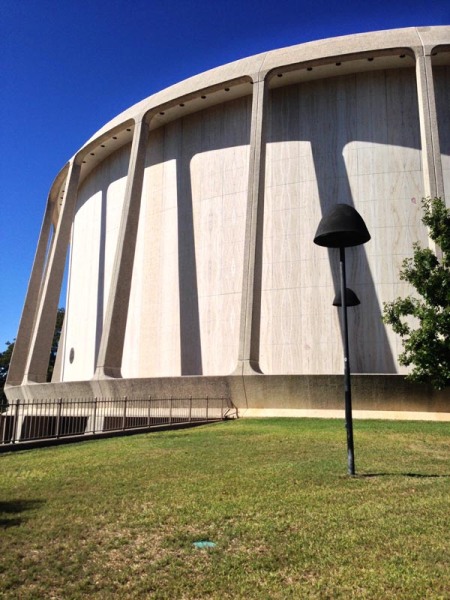
Actually, Throsby does consider that new heritage CAN be made, although like wine or scotch, only time tells whether it will contain the cultural value we associate with currently recognized heritage. In the United States our preservation battles today are often over 1960s High Modernism, where some debate still takes place over its value. Throsby goes on to enumerate the cultural values inherent in heritage which are non-economic:
Aesthetic Value
Symbolic Value
Spiritual Value
Social Value
Historic Value
Authenticity Value
Scientific Value

This list is broader than the Alois Riegl list many of us grew up with, but it does track with many landmarks ordinances, and in terms of our work at GHF, it relates well to both our archaeological (Scientific Value) and architectural (Aesthetic and Symbolic Value) projects, not to mention those spiritual and social glues that make communities cohere. Throsby then links the two and proposes a future valuation technique analagous to health economics that would begin to more mathematically monetize cultural values. We sort of “get it” when we read about cities people choose to live and invest in due to “quality of life” issues.
X drum tower nightS
like good dumplings
Throsby also deals with the carrot-and-stick of heritage policy. This is something we discuss a lot at the National Trust for Historic Preservation: trying to go beyond The Ones Who Say No. You need elements of both regulation and incentives to succeed in saving heritage and making it function profitably. Much of this is a catalyst effect, but Throsby backed up the contention with a host of statistics and results from a variety of cities, notably in Eastern Europe (Skopje and Vilnius). If the public-private partnership is the vehicle for heritage conservation, then regulation-and-incentive policies are the fuel for its economic engine. The field is still young, as the actual economic impacts have yet to be fully or even adequately measured. For one in the business as long as I, it is at least gratifying to see that economics is now at the heart of our field, rather than tangential to it.

St. Patrick’s Day

March 18, 2013

St. Patrick’s Day.  Corned beef, beer, parades.  This is an American tradition, not an Irish one, but significant enough among Irish-Americans that these traditions spread back across the ocean to Ireland, where they have been adopted.  This is actually how culture works, which is to say the process is authentic.

Ciudad Perdida: The Urbanism of the lost city

March 15, 2013

A year ago I was teaching a class about cities, about urbanism. The perspective of that class was the history of ideas about modern city planning from the 1890s through the rise of modernism and sprawl in the 1950s to the Jane Jacobs revolution in the 1960s and its continual reverberations to the present day. We read Glaeser, whom I have reviewed before in this blog, and we tended to think of cities in their modern iteration, as large megalopoli built on huge freighters, large trucks, mile-long trains and cars more numerous than bubbles in a champagne glass, their profiles distinguished by skyscrapers recognizable from miles away, their plans defined by a radical manipulation of the natural landscape. Something entirely different from the cowering walled cities of the medieval world. Something defined, as Le Corbusier was wont to do, by fast and effortless modes of transportation.
LA aerial bS
Los Angeles, a couple weeks ago

Think of the postcards of skyscrapers from the 1920s, always with planes flying around them, cars and trucks bustling at their bases, dirigibles docked on their masts. The modern city was about effortless transportation and commerce, about erasing barriers to speed, whether vertical or horizontal. The skyscraper and the highway, massive and modern.
swfc view hand

So it may seem odd that I am thinking of this having just returned from an arduous six-day trek into the Colombian jungles, up and down the Sierra Nevada de Santa Marta, in the Tayrona National Park, to the heritage site of Ciudad Perdida, which of course means Lost City. Trudging along jungle paths with all of your gear in a backpack, passing through indigenous villages far beyond the reach of cell phones and the internet, despite constant rain and humidity and insects (ticks especially – they love me – I am a tick magnet), as far as I have been in a dozen years from civilization, sleeping in hammocks, washing in cold water and cooking by wood fires….
Trail 52 river b
Buritaca River
Trail 20 huts
indigenous village
Trail 43
backpacking up the trail to Ciudad Perdida
Trail 8 cook

This is surely the opposite of urbanism, yes? No. At the end of the third day you climb the 1280 stone steps from the Buritaca River to Ciudad Perdida, an amazing collection of stone terraces and building foundations dating back to the 6th century AD and representing about a thousand years of habitation and rebuilding. The jungle swallowed this city, built by a group we call the Tayrona, but over that millenium this was a city in more than just name, for it had those essential qualities of urbanism I mentioned above.
CP 16 main axis best
The main axis or “chapel” area at Ciudad Perdida
CP 55 grdg stones
detail of flag stone

What these people did was level a section of the rough mountain, build stone walls and fill them with rammed earth, then finish it with huge flagstones. Then atop these terraces which flattened the incredibly jagged and heavily sloped terrain, they build round stone foundations for houses. We have no idea what these houses looked like, but there were hundreds here. Most importantly, the Tayrona connected these flagged terraces and circular foundations up and down the mountainside with a surfeit, a positively luxurious quantity of stone staircases, connecting each platform and house not essentially, but in manifold fashion, to the others. There are sometimes five or more walkways leading off of a platform or terrace.
CP 39 terraces houses
This is a modern house of the shaman or mamo, but it gives an idea
CP 42 pathways
CP 76 nice platform
CP 64 stairs main

These might look like rustic stones, but their function is urban. They make transportation in a jungle, along a jagged mountain, easier. There are no wheels or pack animals, so the stone stairs and pathways create the most efficient and speedy and luxurious method of moving people and goods possible in this environment. The city was built and rebuilt, with terraces covered by another terrace, as seen here:
CP 51 jail

The main axis of platforms shown above has been cleared, but the terraces continue into the jungle and more are being discovered. Conservation has included repairing many of the terraces and staircases, but there are always more, because this city was continually being built and rebuilt. We savor the nature here, with more bird varieties in this one national park than all of the United States and Canada, not to mention frogs and snakes and even jaguars and puma.
CP 61 best

CP 46 cirtcles

CP lichen stair

They estimate a population of perhaps 2000, and the number of terraces and rings (to support buildings) are in the hundreds at least. As you trek the three days up (and two back) you have a typically modern concern about the slash-and-burn agriculture which despoils the jungle, yet at its peak Ciudad Perdida was not surrounded by jungle but by farmed land. The jungle we see today, being destroyed for agriculture, is in fact a secondary growth: when the city was at its height this jungle was already destroyed for agriculture. It was urbanized, which is to say completely altered from its natural state.
Trail 40 indig

Trail 942 slash burn

Trail up i10 village

What Global Heritage Fund has done here through our Project Director Santiago Giraldo and together with the Colombian Institute of Anthropology and History, is not only help conserve the site, but help build lodges along the way that provide for the tourists making the trek. They also provide development to the peasants and the indigenous, offering more efficient wood-burning stoves, septic systems, training, education and economic development for local communities. We have built one bridge over the sometimes unpredictable Buritaca River, which serves both the indigenous and peasant communities as well as helping the tourists make the trek with one less slog through the water.
Trail 29 bridge

You can support GHF’s work by donating here. You can also make the trek from Santa Marta through various approved outfitters, and savor a city that is in many ways like no other city – “Lost” perhaps, but sharing with all of our cities the basic tenets of human civilization in a form very different from what we are used to.

CP lodge Romauldo SGCP i main iBest

Context, Culture, and the Authenticity Fetish

March 4, 2013

One of the themes that I have repeated in this blog over the years: that preservation is a process, not a set of rules, is being born out daily in my work as Executive Director of the Global Heritage Fund (join here!). That is because we deal with a great variety of cultures and contexts across the world, from Asia to the Middle East, from South to North America, and from remote archaeological sites to vernacular villages and cities.
pheakday talking
Pheakday Ngounphon at Banteay Chhmar

The process of historic preservation/heritage conservation is actually quite consistent: Identification, Evaluation, Registration, and Treatment. My old friend Ted Hild of the Illinois Historic Preservation Agency used to label it as “hunt ‘em, catch ‘em, cook ‘em and eat ‘em,” which is a fun analogy. Fun aside, the point is the process, and what the Burra Charter famously recognized back in 1999 was that while the process can be consistent across continents and cultures, there are really not universal standards for identification, evaluation, registration, and treatment. What a particular culture in a particular context IDENTIFIES as significant may differ – in terms of tangible versus intangible heritage; in terms of social history versus design history: in terms of the stories it deems indelible to the transmission of cultural heritage. The Burra Charter and subsequent protocols have urged us to heed this cultural input at each step of the process: WHAT do you think is important; HOW do you evaluate that importance; WHAT do you do legally or politically to enforce this; and HOW do you treat the resource you have identified, evaluated and registered?
dun yongS copy
Amsterdam
heshui callig4
Calligraphy is the highest art form and the most important to preserve, for example

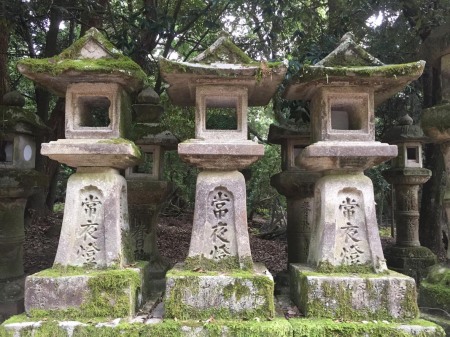
Many cultures prize historic trades and techniques much more that the fabric, the materials of the resource, which we tend to prize in the West. The Japanese Shinto temples are a thousand years old but they are rebuilt each generation using the original tools and techniques of a thousand years ago. We prize the patina and finish of the building that Washington slept in but we see no contradiction in putting it back together with epoxy and nail guns.
ise-naiku-shinto-shrine2s
221 eave1111s

Today I visited this Japanese building completed in 1991 in Hakone Gardens in Saratoga. It is an “authentic reproduction of a 19th century Kyoto tea merchants’ house and shop.” Timbers for the building were cut with traditional tools and techniques in Japan and it was assembled in the U.S. by Japanese carpenters. No nails. It has no “age value” as fabric or material, but then again those materials have been assembled using ancient methods.
Hakone  Gdns ccS

The basic cultural context issue described here is the question of authenticity. Where does authenticity reside? In the U.S. we avoided that term and used instead “integrity” because it was easier. But “integrity” also fed into our architectural bias, a bias that has both fed our fetishization of architectural authenticity and at the same time EXCLUDED many of our own minority traditions from the process of preservation. We have codified a series of treatments for architecture that, unlike the process, are not consistent across times and cultures.
carlos thropp torSS
mlk monmt clsS
The failing we have had in the U.S. in the 46 years since the creation of the National Register of Historic Places is our tendency to focus on architectural significance. Indeed, arguably our culture has defaulted in the direction of design history, in part because it is easier to SEE and thus identify, but also in part due to our particular preservation history, which has been heavily inflected by architecture and design since the early decades of the 20th century.
pope leighey bdrmS
you make your bed you sleep in it
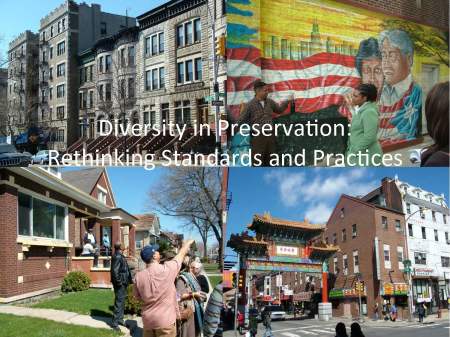
We are struggling with this issue on the Diversity Task Force at the National Trust for Historic Preservation (join here!). As Vice Chair, I have tried to bring this international perspective – that the contemporary PROCESS of cultural heritage preservation is a way to reclaim the full breadth of our historic cultures – to the Task Force’s work. The implications for outcomes are substantial: we may well call for revision of the Secretary of the Interior’s Standards for Identification, Evaluation, Registration and Treatment. More incisively, we could request that the Secretary of the Interior adopt “authenticity” instead of the less politically challenging “integrity.” One of the reasons that we have focused on architectural design in American preservation is that it is a safe harbor, a politically neutral space, and during the rise of the preservation movement in the 1960s, a call for a Civil Rights Trail as a national heritage area (which we are doing now) would have been extremely contentious.

first McDonalds FRbestS
This is the first McDonald’s (the one in LA is the Ur-McDonald’s), preserving an element of shared culture.
UG RR maywood insS
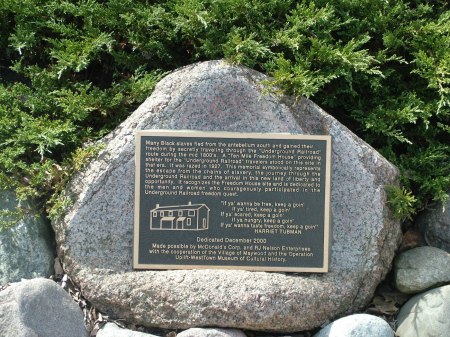
This is an installation in the parking lot of a McDonald’s in Maywood, Illinois, commemorating a long-lost station on the Underground Railroad.

The definition of fetish is the attribution of religious or mystical qualities to inanimate objects. In the western and American tradition, we tend to fetishize the object as opposed to the process. Arguably, one can fetishize the process as well, and indeed the desire to preserve is at base a desire to retain some spiritual qualities of a thing or an act. Our challenge today with our historic process of identification, evaluation, registration and treatment is to determine more precisely how this process can capture the most salient spiritual elements of our cultural inheritance. This is much more than architecture, certainly it is much more than architectural design. If these walls could talk…..
LG Main Street 1890s blockS

Modern and Ancient, my Whirled in Views

February 7, 2013

As the Executive Director of the Global Heritage Fund I deal with many ancient sites, including one of the most ancient, the religious complex being excavated by the Deutsche Archaeologische Institut at Göbekli Tepe, Turkey, where stone columns carved with animals form intriguing ringed structures that predate Stonehenge by 6,000 years. This is not only ancient, it is more ancient than almost any other site people are preserving. I am honored to be involved in this.
Klaus-Peter Simon_2012

But as a Trustee of the National Trust for Historic Preservation and Board Member of Landmarks Illinois, I am dealing with lots of modern artifacts, including the justifiably famous Prentice Women’s Hospital, a 1975 landmark that marked the first deployment of computer-aided design and crafted concrete cantilevers known for their beauty as well as their ability to hold a 45-foot projection. Bertrand Goldberg – whom I met – designed the building in his famous ‘flower petal’ mode and I have blogged about it many times before. Here. And here. And here. And way back here over two years ago. Which just goes to show you that preservationists are not always slow on the draw. We had the drop on the bumbling owner (Northwestern University) by, like EIGHT YEARS. Their clout might well prevail, but they definitely showed up late and unprepared.

The denouement, a court-ordered second hearing on landmark status and denial, will be held today, February 7, 2013.
prentice 1009s

Okay, time for ancient again. One of our cool sites here at Global Heritage Fund (you can JOIN here.) is El Mirador, a 2,500 year old pre-Classic Mayan site in Guatemala. Led by Dr. Richard Hansen, the conservation of this site includes one of the world’s largest pyramids and a massive frieze uncovered by Hansen’s team. The project also preserves a unique and rich biosphere that surrounds the site, enveloping it in dense jungle.
MiradorPolpolvu_Frontal
el-mirador

And now back to modern. I was just reading about the people who bought the Frank Lloyd Wright house in Arizona and wanted to demolish it because it sits on two lots and they could make a lot of money developing the land. Their attitude was that the building is a lovely landmark, but they need their money. Which is in my view a dramatic misunderstanding of capitalism. Capitalism is not a system that guarantees a profit: it is a system that may reward risk with profit; may reward investment with return; and may reward hard work with leisure. But it doesn’t guarantee that. That would be socialism or something. I used to have a hard time explaining to my students that real estate values didn’t always go up – because they had lived in a time when real estate values always went up. This gave them a skewed vision of history, which 2007 quickly corrected. Also, the owners whined and whinged that landmarking affected their property value negatively, without noting the irony that zoning into two lots had artificially inflated their property value. Both are government actions that affect the marketplace.
waller 98 2844s
Here is a Frank Lloyd Wright Building I bought for $1 twenty years ago. I paid at least $40,000 too much. But I didn’t whine about it. Maybe I should have. The Arizona housenappers got paid.
CM allen hs 1863s
This house cost $10,000 to build in 1863. It sold for less than $4,000 40 years later. That’s how history and economy work.

The challenge for all of historic preservation/heritage conservation is the challenge of adaptive re-use: How do you make a cultural artifact viable for the present and future social economy of a place? Every use is an adaptive re-use: the most primitive is the museum (even though museums as a concept are less than 300 years old). We think that this is preserving a house or an archaeological site just as it was but in fact it is repurposing it: it is making it into a museum.
glessner viewS
Dear old Glessner House, Chicago
hanyangling-19
Dear old Hanyangling archaeological site, Shaanxi

Museums are not a great business model, so at GHF we are always looking for more economic variety and vitality in our projects. Ways to rekindle economic engines. Sitting in the heart of Silicon Valley, that approach to re-use seems to me more possible than ever. I live in an economy of ideas and technology, where fortunes are made not by the crude manipulation of matter into universal type-needs, but by the creative manipulation of concepts into new types of action and interaction that redefine not simply how we live but what we live and why we live.
virtuous real estateS
And unlike Arizona, our real estate is virtuous.

The internet (where you are right now) means people can live in many places, and while the value of face-to-face easily trumps online, we are finally living in the world that Morse promised over 150 years ago, where place becomes more of a choice for a significant portion of the population. And thus PLACE becomes not only the most valuable consumer item, but a key economic generator. And historic artifacts are a key – often the dominant one – to the iconography and desirability and thus the price – of PLACE.
from front doorS
Nice weather helps.

But isn’t ancient more important than modern? It is older, after all, right?
the view84s
N gate best
The top picture depicts a site that is newer and younger than the lower picture.

Bund E
robie sideS
Same here.

burling-st-mcmansion
051509_3149
And here.

History is not arithmetic. 3000 years old is not three times as good as 1000 years old, and for that matter, 100 year old is not twice as good as 50 years old. Of course “age” figures into it, but so does “significance.” There are sites that have had massive impact on millions of people that are relatively modern, and there are corresponding ancient sites that have affected only a small number. More intriguingly for some of our GHF sites, we do NOT YET KNOW the impact of some of these places until we research them further. Marcahuamachuco in Peru is one example I mentioned last fall.
monjas B or C
this place, remember?

In addition to age value, we art value and historical value, which apply to some of the architectural landmarks pictured above. These values, handed down to us most notably by Alois Riegl (who wrote in 1903, making him twice as important as Hosmer who wrote 50 years later – JK!) have been at the center of heritage conservation discourse for a while. Riegl distinguished between a small number of historic monuments preserved essentially as museums, and the more common practice of adaptive re-use for the cultural landscape as a whole. He also recognized “newness value,” which is sort of the “next shiny thing” value because it describes our species obsession with novelty.
South St colorful3
old is new again

Each of these values can contribute – in different amounts – to the value of a PLACE, and I think ultimately that is the goal of our science, our mission. At Global Heritage Fund we recognize that conservation of heritage is about engaging and improving the lives of those who live around that heritage. We recognize that how heritage is preserved is part conservation science and part economic development. And we also know that when things are conserved in this way, they last.

Reuse and the Cultural Landscape

January 19, 2013

It has been almost three weeks since I blogged and since I officially became Executive Director of the Global Heritage Fund (GHF), which is NOT an excuse not to blog. But I have been busy. We are developing our slate of projects for the year.
GHF truck copy

The mission of the Global Heritage Fund is to help protect heritage sites in the developing world through community development. This was the vision of Founder Jeff Morgan, who also crafted our Preservation by Design® strategy: equal parts Conservation, Planning, Community Development and Partnerships. He understood “preservation” as a community development strategy, and that attracted me to GHF.

Bas Relief crane work be copy

This strategy is what guides the decisions we are making now about projects. Morgan realized early on that archaeology sites were often not adequately conserved, since archaeologists were focused on excavation and research. Moreover, it was politically risky proposition to be involved in excavation as a foreign NGO: one misstep and you never work again. To this Morgan added architectural conservation, in sites like Banteay Chhmar, a 14th century Khmer temple in Cambodia and Pingyao, a traditional walled Chinese city with some 500 original courtyard houses.

jumble of stones copy

PY walls 53s copy

In addition to archaeology and architecture, this year we proposed two new projects that represent the cutting edge of our field: cultural landscapes. Having started my professional career 29.9 years ago on the U.S.’ first heritage area, this is a development I find very exciting. In both Transylvania (Romania) and Guizhou (China) were are working on World Heritage sites that are collections of minority villages.

Transylvania3

The architectural challenges are similar to Pingyao: how do we modernize and conserve traditional architectural forms? This is no small challenge, but the bigger challenge is how do we preserve the larger cultural landscape? Not simply the buildings, but the public spaces, the agricultural fields, and the traditional folkways, customs and processes that tie it all together?
Transylvania

The Chairman of our Board Dan Thorne recently described the sustainability of traditional agricultural practices as one of the greatest challenges for the heritage conservation field. If we want to visit places that are not simply static, lifeless museums, we need to preserve the life patterns – the social economy – of those places. Thorne opened my eyes to the fact that Transylvania and Guizhou, despite being a world apart, were dealing with the same issues.

PY Nan st vwS copy

This is the challenge I have been grappling with in Weishan, China for a decade: how do you preserve the inhabitation of a landscape: the patterns of farming, cultural expression, urbanism and architectural form that make a particular place unique? I have spoken twice at ICOMOS Conferences about Weishan as a “contingent success” that as avoided both “catastrophic tourist development” and the sort of formulaic modernization that is careless and reckless with a community’s heritage and identity.

Menghua bi detailS

In 2008 I participated in (and blogged about) a Sustainability Conference in Yunnan. I recently me with one of my colleagues from that trip, Christina Heyniger, an adventure travel professional and pioneer who posed the same question in a new way: sustainable stasis.

Do we have a model for a community that is not based on absolute growth, which therefore threatens either physical resources or folkways and traditional economies? Do we have a model for sustainable stasis?” Heyniger asked me. I could not think of one. Heyniger here enunciated a key question for our field, and one that has dogged me for years.

heshui calligrapy copy

Our CFO Bob Stanton told me about heritage villages in Japan that do preserve the traditional crafts and other patterns of life. These become to some extent high-end tourist destinations, but in a larger sense, even that most hopeless of re-use strategies – the museum – needs something to sell in its gift shop to make ends meet. That is why they sell porcelain in Portmerion, neckties at Fallingwater, and whiskey at Mount Vernon. Perhaps there is a balance: tourism is always a piece of place economics. It is only dangerous when it is the only piece or it goes too far.

woodlawn gift shopS

In a real sense, the challenge is to fine-tune our approaches so that we can find new markets, new functions, new value in both elements of a cultural landscape: the tangible and the intangible. In both of the project proposals we are working with a series of other partners who will help design what could be a pathbreaking strategy not just for Europe and China, but for any place that wants to hang onto elements of its past that seem economically obsolete.

Transylvania2

Are they really economically obsolete? That is the first question. GHF is in Silicon Valley, where products are invented not out of need or even desire but from the realms of possibility, question and failure. I have only had a iPhone for two months but I could never have lived without it. We need to bring the Valley’s penchant for innovation to the world heritage cultural landscapes of the developing world. We need to find adaptive re-uses not only for buildings but also for ways of life.

heshui geese 3 copy

Maybe our challenge is to make obsolescence itself obsolete.


Follow

Get every new post delivered to your Inbox.

Join 120 other followers